

Auditors usually make use of the relationship of the three components of audit risk to determine an acceptable level of risk. In this case, as they cannot change the level of inherent and control risk, they need to change the level of detection risk to arrive at an acceptable level of audit risk. This is due to without proper assessment of inherent and control risk, auditors would have no basis for assessing the detection risk.

What is Model Risk Management (“MRM”)?
- The organization should aim for proper and maximum management of such a risk so that the financial statements have reasonable accuracy and reliability.
- F8 students, however, will typically be expected to have a good understanding of the concept of audit risk, and to be able to apply this understanding to questions in order to identify and describe appropriate risk assessment procedures.
- Enron is perhaps the most well-known auditing scandal – and all three of these risks show up in the Enron scandal.
- Helping clients meet their business challenges begins with an in-depth understanding of the industries in which they work.
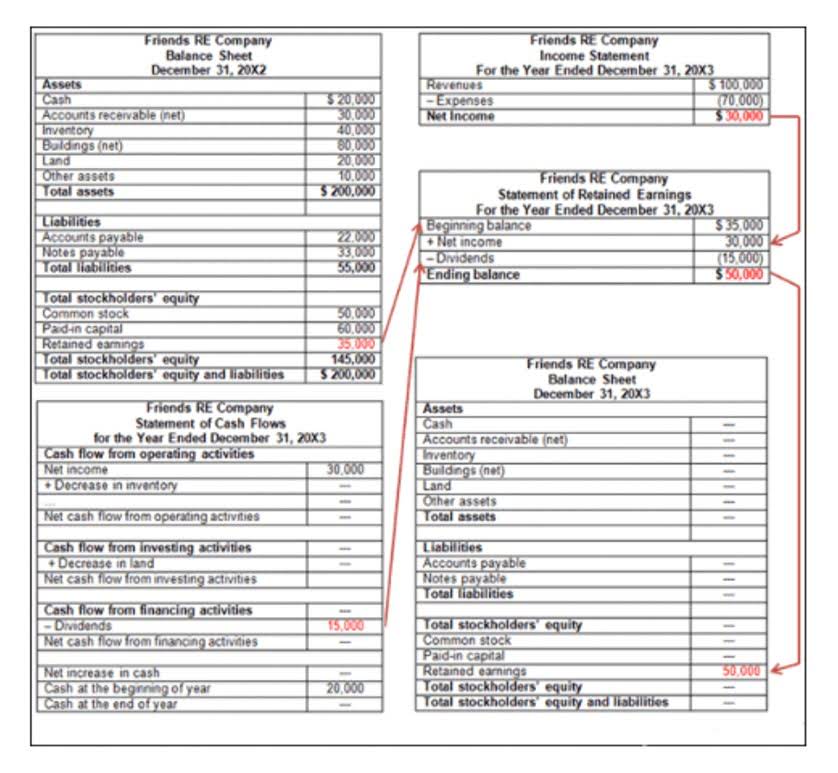
We should not take internal control into consideration when assessing inherent risk. In the following discussion, the audit risk model will be introduced by illustrating a daily life example income statement relating to risks of material misstatement existing at the assertion level for a class of transactions, sales revenue. Control risk is the risk that potential material misstatements would not be detected or prevented by a client’s control systems. When there are significant control failures, a client is more likely to experience undocumented asset losses, which means that its financial statements may reveal a profit when there is actually a loss.
What Is The Audit Risk Model?
Look at the functionality offered by the Predict360 Audit management software and learn how your organization can do audits at a better pace with fewer resources. For example, suppose inherent risk for the jewelry store is assessed at 100% and control risk is assessed at 80%. In this case, we cannot rely on the client’s controls (or lack of them) to reduce the risk of material misstatement for the existence assertion of inventory. Auditor’s responses should focus on how the team will obtain evidence to reduce the risks identified to an acceptable level. Their objective is confirming whether the financial statement assertions have been adhered to, and whether the financial statements are true and fair.

Purpose and Objectives of Auditing Financial Statements
The judicious application of audit procedures and technologies enables auditors to effectively manage and mitigate audit risk, culminating in an audit opinion grounded in thorough analysis and deep insight. This dedication to risk assessment and management underscores the pivotal role of internal controls and strategic planning in achieving financial statement precision and reliability. By doing so, they position themselves at the forefront of the profession, ready to tackle audit risks with confidence and precision. In the strict field of reviewing financial statements, detection risks show how likely it is that auditors will miss critical mistakes despite employing their best efforts following auditing standards. A common example arises in the context of complex financial transactions, where the intricate nature of the transactions themselves could obscure significant misstatements from the auditor’s view. This is particularly audit risk model pertinent when audit sampling — a technique widely used to infer the accuracy of financial records — is deployed.
- However, there’s some level of detection risk involved with every audit due to its inherent limitations.
- Materiality is the threshold above which a misstatement is considered significant.
- Lower inherent risk implies that the account is not likely to be materially misstated.
- Drawing on both traditional auditing methodologies and AI governance frameworks, AI audits make sure that these systems meet standards for functionality, transparency, ethics and compliance.
AccountingTools

This is not a response that the auditor would adopt, as they would be focused on testing valuation through after date cash receipts or reviewing the aged receivables ledger. This element of the syllabus has been examined in the last three sessions of Paper F8 – in June 2010, December 2010 and June 2011. This article aims to identify the most common mistakes made by candidates as well as clarifying how audit risk questions should be tackled in order to maximise marks. Rigorous Documentation provides a detailed Airbnb Accounting and Bookkeeping account of the audit process, findings, and the rationale behind the auditors’ judgments. This transparency is crucial for accountability, enabling a clear understanding of the decisions made throughout the audit. Audits come with multiple pain points like endless manual checks, an overwhelming number of Excel sheets, slow and error-prone workflows, etc.
- All subsequent references in this article to the standard will be stated simply as ISA 315, although ISA 315 is a ‘redrafted’ standard, in accordance with the International Auditing and Assurance Standards Board (IAASB) Clarity Project.
- Disclosure management software streamlines the key finance process and reduces errors immediately.
- This kind of risk could also be affected by the external environment, such as climate change, political problems, or other PESTEL effects.
- Many businesses have suffered losses because there were audits that failed to discover the problems and risks present within the organization.
- In risk management, simulation can be used to measure risks, to guide decisions and sensible actions in light of those risks, to take steps to reduce risks, and to monitor risks over time.